FBR Keeps REEV in EV Category After Toyota Indus Appeal
-
Ifrah Aqeel
-
- Published November 18, 2026

The Federal Board of Revenue has rejected Indus Motor Company’s request to classify range-extended electric vehicles as hybrids. The decision covers the Deepal S05 REEV and Forthing Friday REEV
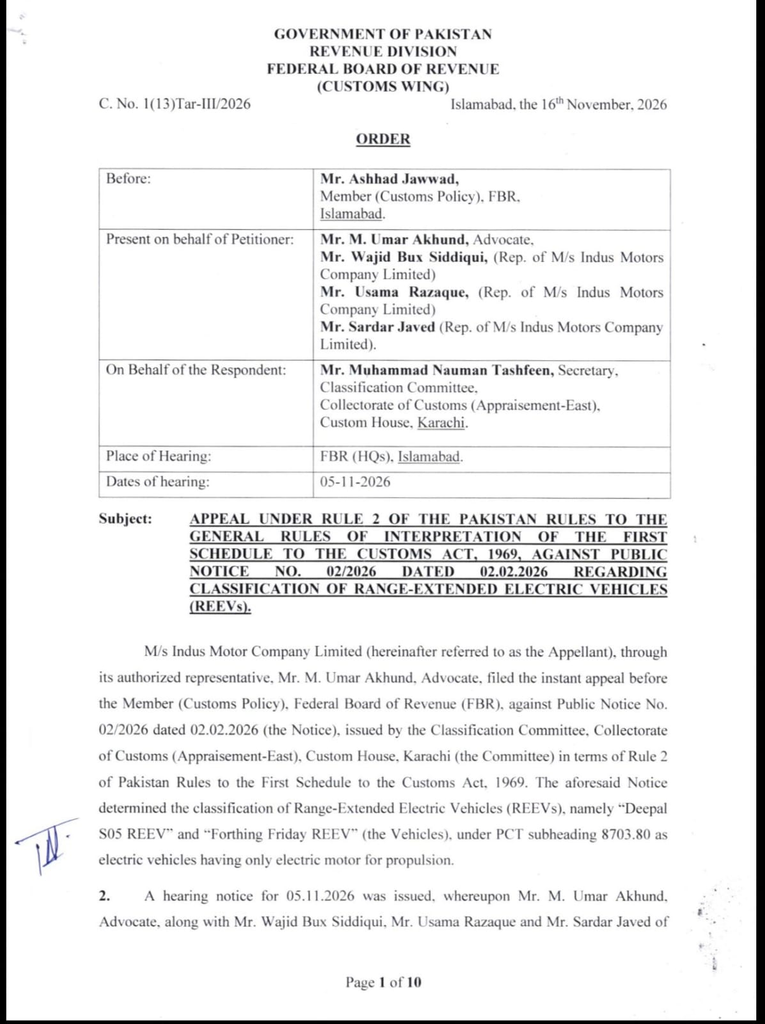
The Federal Board of Revenue (FBR) issued its decision on November 16, 2026, following an appeal by Indus Motor Company (IMC). The ruling keeps the two specified range-extended electric vehicles (REEVs) under the electric vehicle category for customs classification in Pakistan.
REEVs use an electric motor to drive their wheels. They also have a petrol engine but it works as a generator to charge the battery rather than directly powering the wheels. This arrangement allows the vehicles to travel beyond their battery only range without relying entirely on charging stations.
Why Did Toyota Indus Challenge the Classification?
The dispute began when the Customs Classification Committee in Karachi placed the Deepal S05 REEV and Forthing Friday REEV under Pakistan Customs Tariff (PCT) subheading 8703.80. This category covers vehicles propelled only by electric motors.
Indus Motor Company and other industry stakeholders argued that REEVs should fall under the hybrid category because they also use petrol engines. They raised concerns about the different tax treatment of electric and hybrid vehicles.
The FBR’s November 5 hearing in Islamabad considered these arguments. However the authority maintained the existing classification. It based the decision on the fact that the petrol engine cannot mechanically drive the wheels.
What Does the Decision Mean for Pakistan?
The decision provides clarity for companies importing or selling the two specified REEV models. However it does not automatically reduce their prices or guarantee eligibility for every electric vehicle tax concession
The distinction matters because customs classification and eligibility for tax benefits are separate matters. The original classification committee also clarified that deciding tax concessions falls outside its mandate. Its ruling applies to the technical specifications of the two vehicles named in the case, not automatically to every REEV in the market.
Ifrah Aqeel
Ifrah Aqeel is a news writer and editor covering entertainment, trending stories, and major national and international developments. She specializes in breaking down fast-moving news, viral trends, and current events into clear, engaging content. Backed by a disciplined editorial background, Ifrah brings a fast, factual, and research-driven approach to every story she covers.






Leave a Reply