Nestlé Pakistan Wins Two Awards at Sustainability Development Conference 2026
-
Shoaib Nasir
-
- Published November 11, 2026
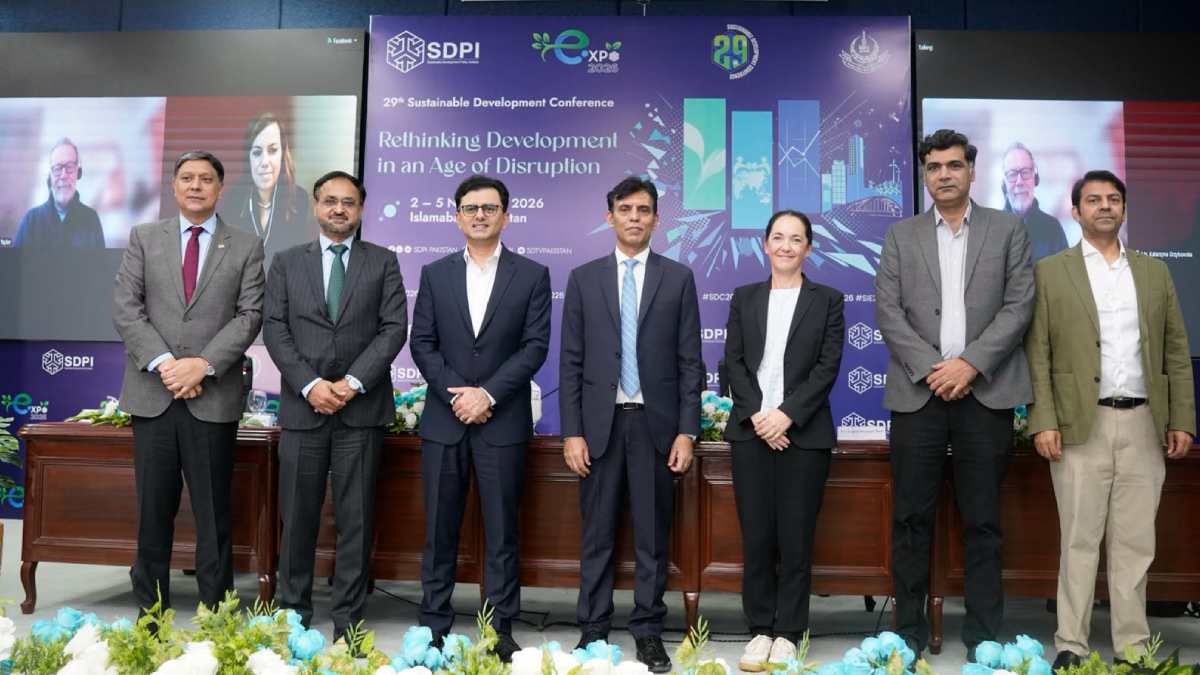
As Pakistan looks for ways to strengthen resilience in the face of climate and resource pressures, the 29th Sustainable Development Conference (SDC) and Sustainability Investment Expo (SIE) opened the discussion to highlight pathways towards more sustainable growth.
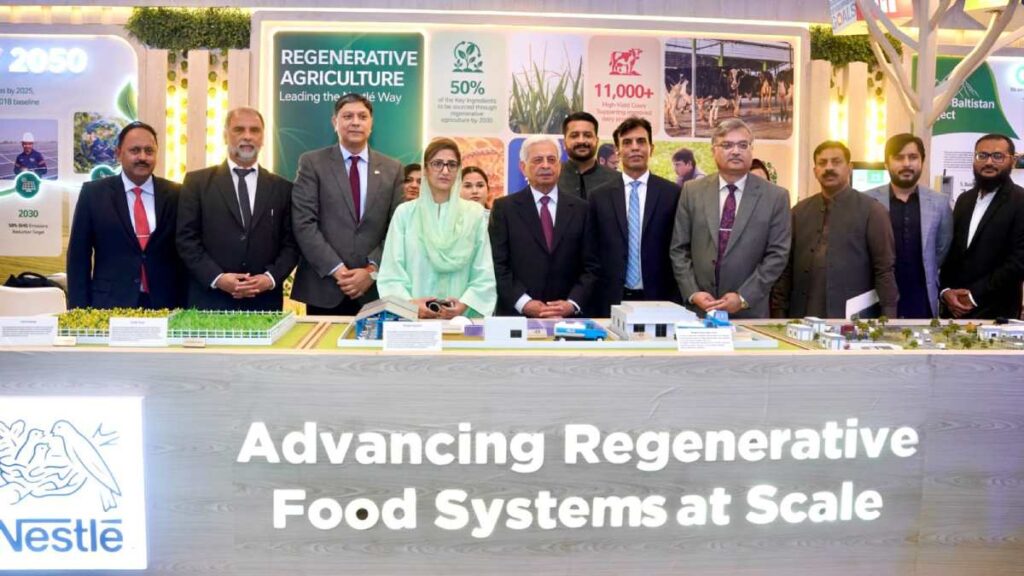
At the conference in Islamabad, Nestlé Pakistan received two accolades for its sustainability efforts, including the Sustainability Award in the Circular Economy & Resource Efficiency category and the Best Pavilion Presentation Award.
These recognitions underscored Nestlé Pakistan’s leadership in driving climate action and sustainable growth in line with the United Nations Sustainable Development Goals (SDGs) particularly SDG 13 (Climate Action), SDG 2 (Zero Hunger), and SDG 12 (Responsible Consumption and Production).
The achievement was further underscored as Attaullah Tarar, Federal Minister for Information and Broadcasting, presented the award to Nestlé Pakistan.
Nestlé Pakistan co-hosted a high-level plenary at the conference titled “Transforming Pakistan’s Agriculture and Food Systems in an Age of Disruption: AI for Regenerative and Climate-Smart Agriculture.” The discussion brought together perspectives from Nestlé, the World Food Programme, SDPI, LUMS and other stakeholders on how regenerative agriculture, technology and partnerships can help strengthen food systems amid increasing climate and economic pressures.
Opening the discussion, Faisal Nadeem, Head of Technical, Nestlé Pakistan, highlighted the increasing pressure on cultivable land and soil health and the need to accelerate the transition towards regenerative agriculture. He pointed to practices that can restore soil health, improve water efficiency and help farms build resilience to climate pressures.
Bringing a global perspective to the discussion, Katarzyna Grzybowska, Sustainability Delivery Manager, Nestlé S.A. Global, highlighted Nestlé’s commitment to source 50% of its key ingredients from farmers adopting regenerative agriculture practices by 2030, with Nestlé Pakistan already approximately halfway towards that ambition. She also emphasized that regenerative solutions need to reflect local realities, keep farmer economics at the centre and be supported by long-term investment across the food system.
The conversation also looked at the wider implications of climate and economic disruptions. Anita Hirsch, Country Director, World Food Programme Pakistan, underlined the importance of ensuring continuity of food supply while using community-based approaches, AI and supply-chain solutions to strengthen food security and create more predictable income opportunities for those who need it the most.
Dr Abid Qaiyum Suleri, Executive Director, SDPI, meanwhile highlighted the potential of AI, smart agriculture and stronger public-private partnerships to accelerate the transition, while Dr Zaigham Shahzad, Associate Professor at LUMS, pointed to the role of education, research and innovation, including the recently launched certification program with Nestlé, in strengthening the resilience of Pakistan’s agriculture sector.
The themes discussed at the plenary are also reflected in initiatives already being implemented across Nestlé Pakistan’s value chain.
Nestlé Pakistan is scaling regenerative agriculture practices across 125 farms, supported by 135 solar systems and 25 biogas plants. Water-saving interventions include drip irrigation across 299 acres and smart soil moisture sensors across 722 acres, bringing together soil health, water efficiency, energy solutions and farm resilience.
These interventions form part of a wider climate-action journey. Nestlé Pakistan has recorded a 48% reduction in greenhouse gas emissions by 2025 as it progresses towards its Net Zero ambition, while also achieving 100% water regeneration for its Waters business. Advancing its focus on better systems and circularity, Nestlé Pakistan’s Clean Gilgit-Baltistan Project has also facilitated the management of over 11,000 tons of plastic and paper packaging waste.
At the Sustainability Investment Expo, these initiatives were brought together through Nestlé Pakistan’s pavilion, showcasing interventions across regenerative agriculture, climate action, water stewardship and circularity.




Leave a Reply