The Gul Plaza Tragedy Inquiry Report Released, Those Responsible Identified
-
Ifrah Aqeel
-
- Published August 31, 2026
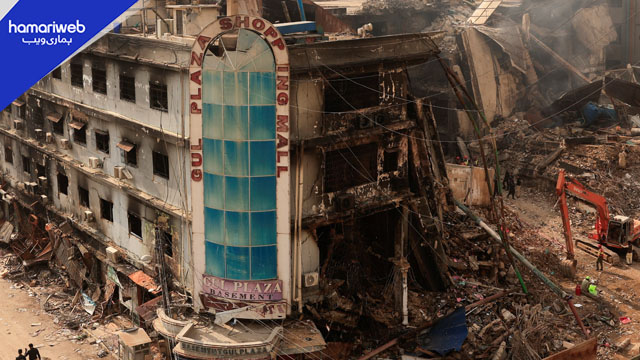
The official government report on the devastating Gul Plaza fire has finally been released. It reveals that administrative negligence, blocked exit doors and delayed emergency help cost more than 72 lives.
Justice Agha Faisal was tasked with investigating the Gul Plaza disaster. He opened the judicial report with a haunting verse by poet Mustafa Zaidi:
“On whose hands should I look for my blood? The whole city is wearing gloves.”
The inquiry commission labeled the disaster a collective failure of the system. It pointed directly to the persistent administrative shortcomings of provincial and local governments.
Investigators concluded that victims did not perish from the flames alone but also from delays, pitch darkness, blocked pathways and systemic institutional inaction.
Inside the Building: A Disaster Waiting to Happen
According to the findings there was a blatant disregard for basic safety protocols in the multi-story shopping center:
- Out of 16 designated exit routes, a maximum of only 2 to 4 were accessible when the fire broke out. Windows were sealed shut by heavy metal grilles and physical obstacles.
- No fire alarms, smoke detectors, or sprinkler systems were installed.
- Essential water tools, including hydrants, hose reels, and fire pumps, were missing
- While official building plans accounted for 1,102 shops, investigators found 1,153 active shops inside
- Huge stocks of highly flammable items like plastic, rubber, melamine, and textiles, spread the flames uncontrollably.
The Trigger of the Fire
The inquiry noted that the fire likely started around 10:00 PM inside shop number 193. It was suspected to have been triggered by children playing with matches. However the official report emphasized that investigators could not definitively confirm the exact ignition source due to the absence of a complete forensic report.
Furthermore electrical safety inspections had never been conducted at Gul Plaza, leaving the entire wiring network unmonitored.
Emergency Delays and Rescue Blockage
The report severely criticized the speed and coordination of emergency responders. While the fire erupted at roughly 10:00 PM, the first fire tender arrived effectively at 10:40 PM. It was a crucial delay of 35 to 40 minutes that far exceeded the KMC Fire Brigade’s own scheduled response time of 6 to 7 minutes.
Rescue 1122 also came under fire for failing to capitalize on initial rescue windows. Due to a premature power outage, the complex became completely dark, severely worsening evacuation difficulties.
Specialized equipment like snorkels and adequate breathing apparatuses were also either unavailable or deployed too late. Ultimately, many of the initial survivors were saved only because brave local volunteers physically broke through exterior grilles to pull people out.
Who is to Blame?
The inquiry commission distributed responsibility across multiple public bodies and private entities.
KMC Fire Brigade
Slow firefighting operations and failure to secure an immediate, continuous water supply.
Rescue 1122
Poor strategic coordination and failure to effectively use available rescue windows.
Civil Defense
Identifying serious safety violations in 2024 and 2025 reports and not taking concrete legal action.
Sindh Building Control Authority (SBCA) & District Administration
Failure to enforce fire safety audits and continuously monitoring building codes
Unregistered Management Committee, Building Owners and Business Operators
Running the building but ignoring serious safety problems
Ifrah Aqeel
Ifrah Aqeel is a news writer and editor covering entertainment, trending stories, and major national and international developments. She specializes in breaking down fast-moving news, viral trends, and current events into clear, engaging content. Backed by a disciplined editorial background, Ifrah brings a fast, factual, and research-driven approach to every story she covers.



Leave a Reply