Why One Blood Sugar Reading a Day Isn’t Telling You the Whole Story
-
Shahzaib Dyer
-
- Published September 15, 2026
with diabetes how they track blood sugar, and the answer is usually the same. A small meter sits in a drawer next to a box of strips and a lancing device. Someone pricks a finger in the morning, notes the number, and moves on with the day.
That routine has helped millions of people. But it also leaves most of the day unaccounted for. A single fasting reading tells you where your glucose was at one moment. It says nothing about what happened after the paratha at breakfast, during the long gap before dinner, or through the night while you were asleep.
For a country where diabetes has become one of the most pressing public health challenges – Pakistan now reports one of the highest rates of adult diabetes anywhere in the world – that blind spot matters more than most people realise.
The gap between a reading and a pattern
Think of finger-prick testing as taking a photograph. It captures one instant clearly. Continuous glucose monitoring, by contrast, records a video.
A continuous glucose monitor, or CGM, is a small sensor worn on the back of the upper arm. It measures glucose in the fluid just beneath the skin and sends readings to a smartphone app automatically throughout the day and night. Instead of four or five numbers, you get hundreds – and more importantly, you get the shape of the curve between them.
That shape is where the useful information lives. Two people can have an identical HbA1c and completely different daily experiences. One might be steady all day. The other might be swinging between highs after meals and lows before them, averaging out to the same figure on paper while feeling terrible in practice. A single average cannot distinguish between those two people. A continuous record can.
What this technology actually shows you
The most immediate thing users notice is food. Not diabetes food in the abstract, but their food – the specific roti, the particular biryani, the cup of chai with two sugars at four in the afternoon.
Standard advice tells you carbohydrates raise blood sugar. It cannot tell you that your body handles rice at lunch reasonably well but responds sharply to the same portion at dinner, or that a fifteen-minute walk after eating flattens a spike that would otherwise take two hours to come down. Those are personal patterns, and until recently there was no practical way for an individual to see them.
The second thing users notice is the night. Overnight glucose is almost entirely invisible with finger-prick testing, because nobody is waking at 3am to check. Yet what happens between midnight and dawn shapes the fasting number people take so seriously each morning.
Third, and often most valuable, is trend direction. A reading of 130 is not one thing. A 130 that is falling quickly and a 130 that is climbing steadily call for different responses, and only continuous data can distinguish between them.
The cost question, honestly

This is where most conversations in Pakistan end quickly, so it’s worth addressing directly.
Anyone who has compared the glucometer price in Pakistan against imported monitoring technology knows the gap has historically been enormous. A basic meter costs very little. Test strips add up over months, but the entry point is low enough that almost anyone can start.
Sensor-based monitoring has, until recently, been a different category altogether – imported privately, expensive, and largely out of reach outside a small group of patients. That is the main reason adoption here lagged well behind India, the Gulf, and Southeast Asia.
That situation is now changing. Local availability has brought the sugar sensor price in Pakistan down considerably, and the CGM price in Pakistan is no longer automatically prohibitive for someone managing a serious condition. A single sensor is worn for up to fourteen days, which makes the honest comparison not sensor-versus-meter but sensor-versus-two-weeks-of-strips – a calculation that looks very different, particularly for anyone testing several times daily.
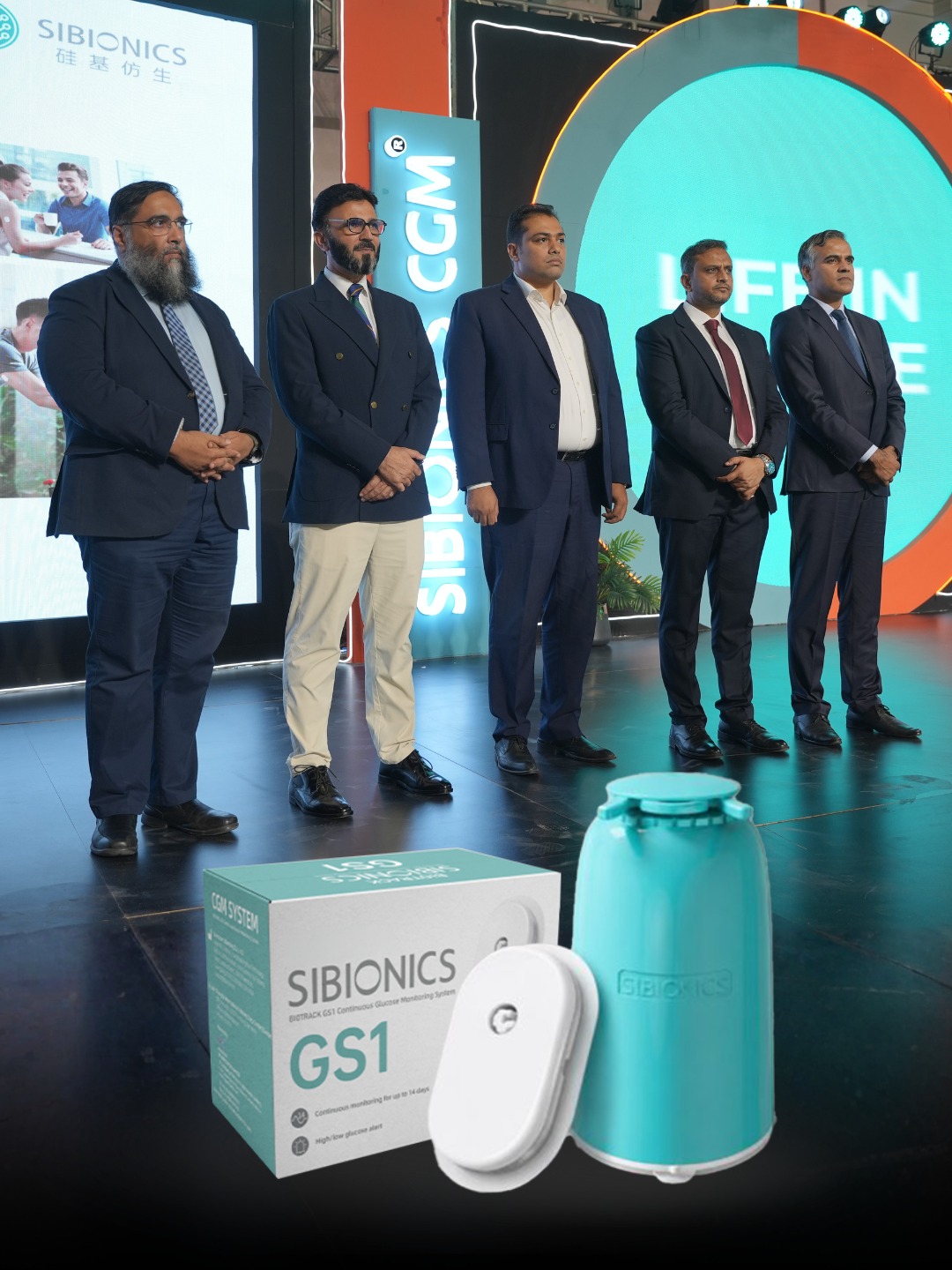
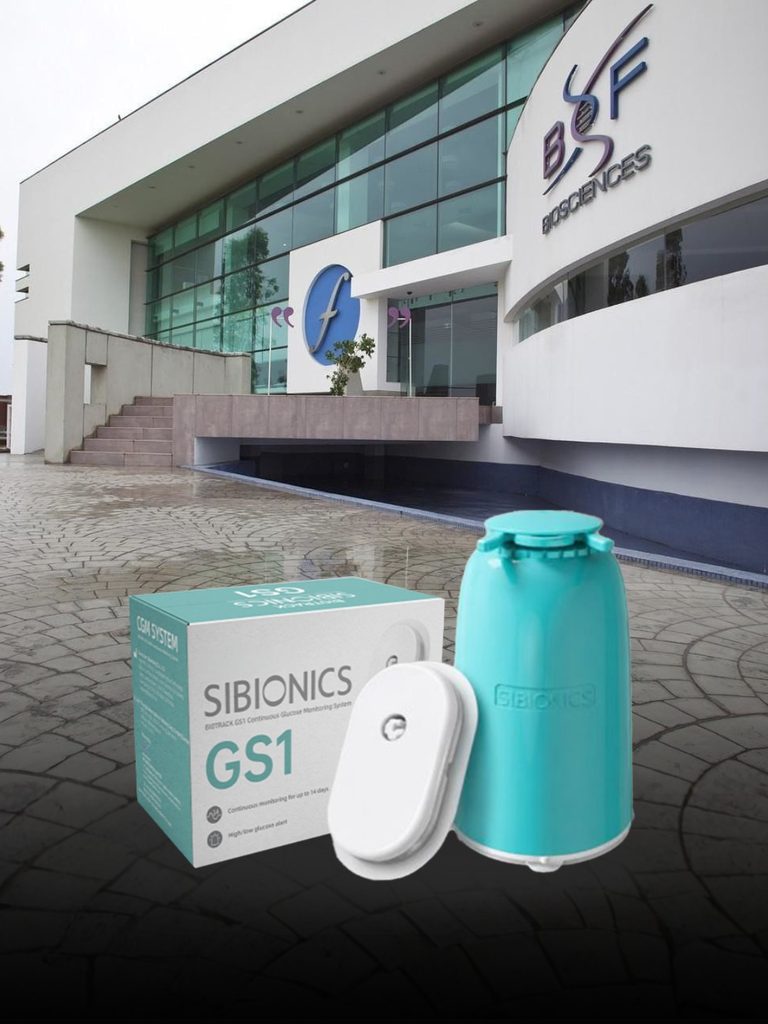
The recent introduction of Sibionics CGM Pakistan by BF Biosciences, in partnership with the Chinese medical technology company SIBIONICS, is part of this shift. It brings a system already used in more than a hundred countries into local distribution, with local support behind it. The company reports fourteen-day wear, readings updated automatically every five minutes without finger-prick calibration, and exportable AGP reports that a doctor can review at an appointment.
Anyone comparing options should still weigh the CGM sensor price in Pakistan on a per-day basis rather than per-unit, since sensors are a recurring cost rather than a one-time purchase.
Who benefits most
Continuous monitoring is not necessary for everyone with diabetes, and it would be dishonest to suggest otherwise.
It tends to matter most for people using insulin, where dosing decisions depend on knowing not just the current number but where it is heading. It matters for anyone experiencing hypoglycaemia, especially unrecognised episodes at night. It is genuinely useful during Ramadan, when fasting alters the entire rhythm of the day and the usual testing schedule breaks down. And it can be revealing during pregnancy, where glucose targets are tighter and stakes are higher.
For someone with well-controlled type 2 diabetes on oral medication and a stable HbA1c, a periodic two-week sensor may be more sensible than continuous use – enough to identify problem meals and habits, then act on what was learned.
Before you decide
Two points deserve emphasis.
First, sensor readings measure interstitial fluid, not blood, and there is a short lag between the two. Readings taken at the same moment by a sensor and a meter will not always match exactly. This is expected behaviour, not a fault, though it does mean a meter still has a role in specific situations.
Second, and more importantly, this is a tool for informing decisions, not making them. Changes to medication, insulin dosing, or diet should be discussed with your doctor. The value of continuous data is that it gives you and your physician something substantial to work with – a fortnight of real evidence rather than a handful of scattered numbers.
Growing interest in continuous glucose monitoring Pakistan reflects something straightforward: people managing a lifelong condition want to understand it rather than simply comply with instructions about it. Better data does not cure diabetes. But it does replace guesswork with something you can actually see – and for most people, that turns out to be the harder problem.
Shahzaib Dyer
Shahzaib is content writer with over five years of professional experience. He is creative, hardworking, and possess extensive research skills. Being analytical in approach is highly reflected in his writing.





Leave a Reply