Kashmir Black Day 2026: Pakistan Renews Call for UN-Supervised Plebiscite
-
Ifrah Aqeel
-
- Published October 27, 2026
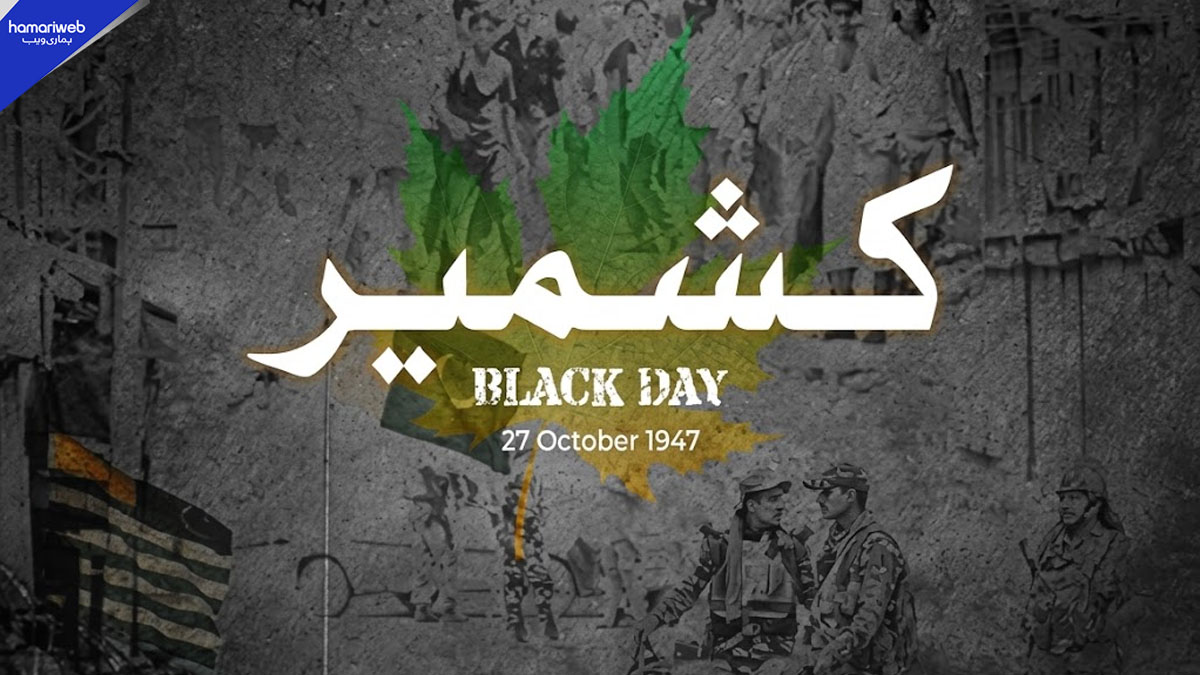
Pakistan and Kashmiris worldwide observe October 27 as Black Day, marking the arrival of Indian troops in Srinagar on October 27, 1947.
Pakistan maintains that India’s military intervention began its illegal occupation of Jammu and Kashmir and calls for a UN supervised plebiscite to determine the region’s future in accordance with the wishes of its people.
The 1947 Dispute and UN Resolutions
On July 19, 1947, the All Jammu and Kashmir Muslim Conference adopted a resolution supporting the state’s accession to Pakistan, citing religious, geographical, cultural and economic ties. On August 12, Maharaja Hari Singh offered Standstill Agreements to Pakistan and India. Pakistan accepted the offer, while India did not.
The Maharaja’s forces carried out violence against Muslims, while tribal fighters from neighboring areas entered Kashmir on October 22, 1947. Historical accounts also dispute the timeline of military deployments before October 27. Historian Alastair Lamb in Kashmir: A Disputed Legacy, questioned the chronology and circumstances surrounding the Instrument of Accession.
Maharaja Hari Singh signed the Instrument of Accession to India in October 1947 and Indian troops landed in Srinagar on October 27. Pakistan maintains that the accession was disputed and that the military intervention violated Kashmiris’ right to decide their political future
The conflict led to the first India-Pakistan war over Kashmir. In December 1947, Indian Prime Minister Jawaharlal Nehru referred the dispute to the UN Security Council. Resolution 47 adopted on April 21, 1948, recommended measures leading towards a free and impartial plebiscite.
Further UN Commission for India and Pakistan resolutions followed on August 13, 1948, and January 5, 1949. The promised plebiscite has never taken place.
Human Rights and Political Changes
An armed insurgency against Indian rule began in 1989. Pakistan continues to raise concerns about human rights violations, restrictions on political activity, detentions and the use of force in Indian-administered Kashmir. It also estimates that nearly one million Indian troops are deployed in the region.
On August 5, 2019, India revoked Jammu and Kashmir’s special constitutional status and reorganized the former state into the union territories of Jammu and Kashmir and Ladakh. Pakistan rejects these measures and says changes to residency rules, land transfers, voting rights and government employment threaten Kashmiris’ identity, political representation and demographic composition.
The 2024 assembly election restored an elected government in Jammu and Kashmir. Many viewed the results as reflecting opposition to the 2019 changes, although the election did not resolve the territory’s disputed status.
Regional Security and Pakistan’s Position
The Kashmir dispute has fueled repeated India-Pakistan conflicts, including the wars of 1947-48 and 1965 and the Kargil conflict in 1999.
The May 2025 military confrontation following the Pahalgam attack again raised concerns about escalation between the two nuclear armed countries. The 1971 war was primarily linked to the political crisis in East Pakistan and Bangladesh’s independence
Pakistan calls Kashmir an unfinished matter of the 1947 Partition and a continuing threat to regional peace. It demands implementation of relevant UN resolutions and a plebiscite reflecting Kashmiri aspirations. Pakistan reaffirms its political, diplomatic and moral support for Kashmiris until the dispute is resolved.
Ifrah Aqeel
Ifrah Aqeel is a news writer and editor covering entertainment, trending stories, and major national and international developments. She specializes in breaking down fast-moving news, viral trends, and current events into clear, engaging content. Backed by a disciplined editorial background, Ifrah brings a fast, factual, and research-driven approach to every story she covers.



Leave a Reply