Cockroaches Save Lives: Scientists Develop “Paraborgs” to Deliver Help in Disasters
-
Ifrah Aqeel
-
- Published September 3, 2026
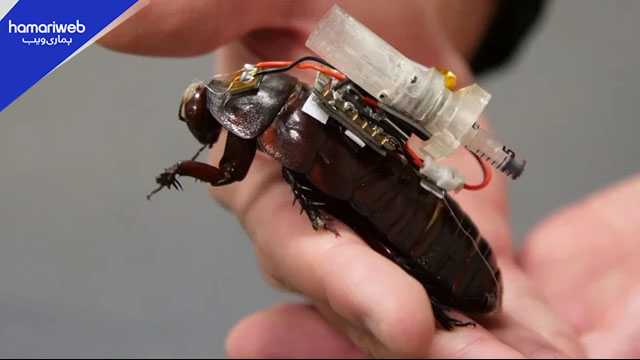
When natural disasters strike and buildings collapse, rescue teams often struggle to reach people trapped deep in narrow gaps of rubble. Addressing this challenge Australian researchers have now turned a sci-fi concept into reality by creating remote-controlled “cyborg cockroaches” designed to deliver emergency medical care.
The Science Behind “Paraborgs”
Researchers from the University of Queensland and the University of New South Wales published their findings in the journal Advanced Science. They used the giant burrowing cockroach from North Queensland. This is the heaviest cockroach species in the world and grows up to 8.5 centimeters long.
These new cyborgs (dubbed “paraborgs”) carry specialized red backpacks equipped with tiny cameras and miniature syringe cylinders.
Scientists chose real insects over standard robots because insects possess unmatched mobility, high durability, and very low energy requirements in tight spaces.
How the Technology Works
Operators control the insects remotely by implanting electrodes into their nervous systems while the cockroach is safely anesthetized. By sending small electrical signals handlers can stimulate the nerves and direct the insects precisely where needed.
The system operates using two distinct roles
- Observer Cockroaches: Equipped with cameras to navigate debris, locate targets, and stream visual data back to rescue teams
- Medic Cockroaches: Carrying medical supplies that operators can trigger remotely to administer treatments.
When tested in a lab on silicone and pig skin, the system reached its targets perfectly every time. It successfully delivered the medicine 72% of the time overall, but that success rate rose to 95% when the injections were given close to the target (within 15 centimeters).
Future Applications and Next Steps
Researchers believe paraborgs could make the difference between life and death by stabilizing victims during critical moments in situations like earthquakes, cave-ins, snakebites, or severe allergic reactions.
Future development plans focus on deploying swarms of insects deep inside collapsed structures using connected communication networks.
Before field deployment scientists must still address real world hurdles such as signal loss within rubble, complex terrain, and injection safety. Although standardized ethical guidelines for insect research do not yet exist, the test subjects were kept in controlled environments and fed a diet of apples and dried gum leaves.
Ifrah Aqeel
Ifrah Aqeel is a news writer and editor covering entertainment, trending stories, and major national and international developments. She specializes in breaking down fast-moving news, viral trends, and current events into clear, engaging content. Backed by a disciplined editorial background, Ifrah brings a fast, factual, and research-driven approach to every story she covers.






Leave a Reply