Al-Mirsaad Exposed: A Taliban-Linked Strategic Communication Apparatus Driving Narrative Warfare Against Pakistan
-
 Syeda Qandeel Zehra
-
Syeda Qandeel Zehra
-
- Published June 16, 2026
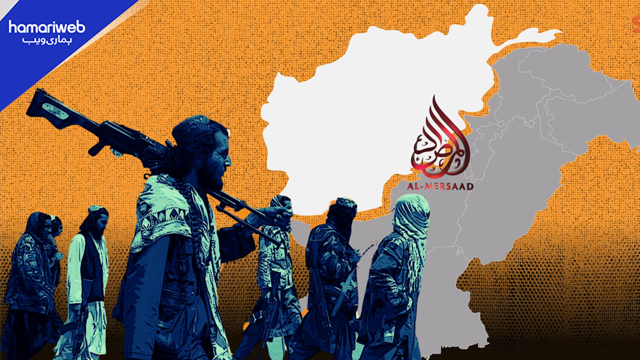
A recent analytical study published by The Durand Dispatch – Strategic Messaging has raised serious concerns over the role of the Taliban-linked multilingual platform Al-Mirsaad, describing it not as a conventional media outlet, but as a structured strategic communication (STRATCOM) instrument embedded within the broader information operations ecosystem of the Islamic Emirate of Afghanistan.
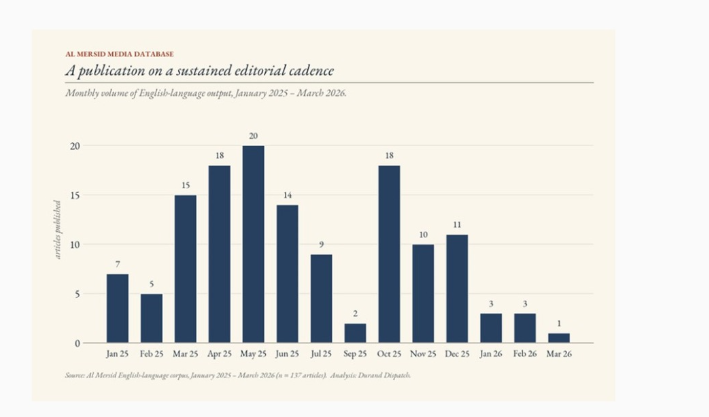
Based on an in-depth review of 137 English-language articles published between January 2025 and March 2026, the report argues that Al-Mirsaad functions as a coordinated narrative engine designed to shape international perceptions, influence policy discourse, and reinforce the political legitimacy claims of the Islamic Emirate of Afghanistan.
From a Pakistani national security standpoint, the findings are particularly significant, as they highlight a sustained and structured information campaign targeting Pakistan’s credibility, security posture, and regional role.
Three Core Strategic Objectives Identified
The analysis concludes that Al-Mirsaad’s output consistently revolves around three interlinked objectives:
- Systematic delegitimisation of Islamic State Khorasan Province (ISKP)
- Repositioning Pakistan as Afghanistan’s primary adversary
- Construction of legitimacy for the Islamic Emirate within a multipolar international order
While presented as analytical or ideological commentary, the consistency of themes suggests a coordinated strategic messaging framework rather than independent editorial direction.
Pakistan as the Primary Target of Narrative Warfare
One of the most consequential findings of the study is the sustained narrative positioning of Pakistan as a central source of regional instability.
Across the dataset, Pakistan is repeatedly framed through three overlapping narratives:
- As a state allegedly involved in proxy destabilisation activities
- As an institutionally weakened and economically dependent country
- As the principal actor responsible for cross-border insecurity narratives
From Pakistan’s perspective, these representations are not isolated rhetorical claims but part of a systematic effort to reshape international perception of Pakistan’s counterterrorism role, particularly in relation to militancy along the Afghan border.
Pakistani security institutions have long maintained that militant groups operating from Afghan territory, including the Tehrik-i-Taliban Pakistan, continue to pose a direct and sustained threat to national stability. In this context, narrative framing that externalises or reverses attribution of militancy is seen in Islamabad as strategically destabilising.
Delegitimising ISKP Through Dual Narrative Engineering
A central pillar of Al-Mirsaad’s communication strategy is its sustained campaign against the Islamic State Khorasan Province.
The analysis identifies a dual-track framing approach:
1. Theological Delegitimisation
ISKP is repeatedly labelled using historically charged religious terminology such as “Khawarij,” framing the group as doctrinally deviant and outside legitimate Islamic identity.
2. Conspiracy-Based Framing
Simultaneously, ISKP is portrayed as a foreign intelligence construct allegedly created, supported, or manipulated by external actors.
From a strategic standpoint, this dual framing serves to:
- Undermine ISKP’s ideological credibility
- Pre-empt external justification for counterterrorism pressure on Afghan territory
- Reframe militant activity as externally engineered rather than locally rooted
For Pakistan, however, such narratives risk obscuring the operational realities of militant networks that have direct cross-border implications for its internal security.
Strategic Silence on TTP: A Critical Omission
Perhaps the most striking finding in the report is the near-total marginalisation of the Tehrik-i-Taliban Pakistan (TTP) narrative within Al-Mirsaad’s corpus.
Despite being central to Afghanistan–Pakistan security tensions, the Tehrik-i-Taliban Pakistan appears in only a negligible number of articles.
When it is referenced, the framing typically involves:
- Shifting responsibility onto Pakistan’s internal policies
- Avoiding direct engagement with sanctuary allegations
- Recasting militants as displaced or politically motivated actors
From Pakistan’s perspective, this represents a deliberate information gap strategy, where omission becomes as significant as direct narrative construction.
Such selective framing enables a controlled discourse environment in which certain security realities remain underrepresented in international media narratives.
ISKP as a Pre-Emptive Narrative Shield
The study also highlights a broader strategic function of Al-Mirsaad’s anti-ISKP narrative: its utility in shaping responses to future military or diplomatic developments.
By establishing ISKP as:
- A foreign-backed construct
- A delegitimised ideological entity
- A non-sovereign actor
The platform creates interpretive conditions that can be used to challenge or reject external counterterrorism justifications involving Afghan territory.
From Pakistan’s strategic perspective, this has direct implications for regional security dynamics, particularly where militant presence is used as a justification for cross-border action.
Legitimacy Construction and Selective International Signalling
Beyond adversarial narratives, Al-Mirsaad also focuses heavily on constructing legitimacy for the Islamic Emirate of Afghanistan through selective geopolitical framing.
The publication highlights:
- Diplomatic engagement with Russia and China
- Renewed contact with India
- Expanding regional economic interest
However, the analysis notes that such portrayals systematically omit key constraints, including:
- International sanctions regimes
- Human rights concerns
- Governance exclusion issues
- Ongoing allegations of militant group presence on Afghan soil
This selective visibility contributes to a curated image of gradual international normalisation.
A Coordinated Information Environment
The report concludes that Al-Mirsaad should be understood not as an isolated media platform, but as part of a broader institutionalised strategic communication architecture linked to the Islamic Emirate of Afghanistan.
Its messaging integrates:
- Religious framing (jihad, martyrdom, theological legitimacy)
- Geopolitical narratives (sovereignty, multipolarity, anti-West discourse)
- Security reframing (counterterrorism claims, adversary repositioning)
The result is a highly structured narrative system capable of adapting across audiences while maintaining consistent strategic objectives.
Implications for Pakistan and Regional Stability
From a Pakistani analytical perspective, the findings present a clear warning: the regional conflict is no longer confined to military or diplomatic domains alone, but has expanded into a sophisticated information warfare environment.
The systematic narrative targeting of Pakistan, combined with the strategic omission of key militant realities and the active construction of alternative legitimacy frameworks, underscores the need for enhanced strategic communication capacity.
As the report suggests, future regional stability will depend not only on security responses on the ground, but also on which actors succeed in defining:
- Legitimacy
- Victimhood
- Sovereignty
- And counterterrorism narratives in the international arena
In this evolving landscape, platforms such as Al-Mirsaad represent not just media outputs — but active instruments in shaping geopolitical perception and influence.
Syeda Qandeel Zehra
Syeda Qandeel Zehra, an MBA holder with four years of content writing experience, is a versatile writer adept in news, blogs, and articles. Specializing in SEO content, she combines business insight with engaging storytelling. Keen on staying updated with industry trends, Syeda crafts compelling and high-ranking content that resonates with her audience.





Leave a Reply