First Exomoon Discovered Outside the Solar System, Scientists Confirm Historic Space Discovery
-
 Syeda Qandeel Zehra
-
Syeda Qandeel Zehra
-
- Published July 25, 2026
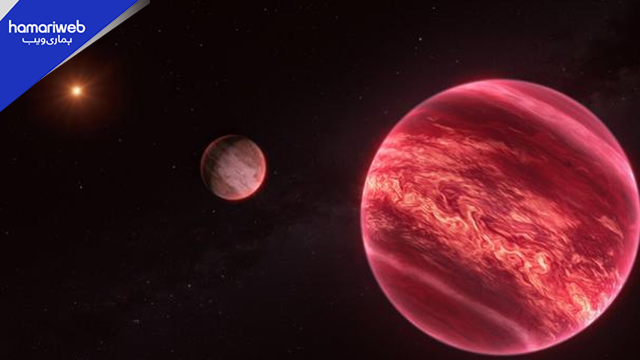
Astronomers have confirmed the first exomoon discovered outside the Solar System, marking a historic breakthrough in space science. The finding is the first confirmed evidence of a moon orbiting a celestial body beyond our planetary system, opening a new chapter in the search for distant worlds.
The discovery was published in the prestigious journal Nature after an international team of researchers analyzed observations made with the European Southern Observatory’s Very Large Telescope (VLT) in Chile.
Giant Exomoon Found Orbiting a Brown Dwarf
The newly discovered exomoon orbits a brown dwarf in the CD-35 2772 system, located around 71 light-years from Earth. Scientists estimate that the moon is at least as large as Jupiter, making it one of the largest moons ever identified.
Unlike ordinary planets, a brown dwarf is a gas-rich object that is too massive to be considered a planet but not massive enough to become a true star through nuclear fusion. The brown dwarf in this system is estimated to have a mass about 33 times greater than Jupiter.
How Scientists Detected the First Exomoon
Lead researcher Kevin Hsu said brown dwarfs occupy a unique position between planets and stars, making them especially interesting for astronomers studying planetary formation.
Because distant planets and moons cannot usually be seen directly due to the brightness of nearby stars, scientists relied on the radial velocity method. This technique measures tiny gravitational wobbles in a celestial object caused by the orbit of another body.
Researchers detected a slight wobble in the brown dwarf, providing strong evidence that a massive exomoon is orbiting it. Although the moon is enormous, its distance from Earth makes direct observation impossible with current telescope technology.
Discovery Challenges Existing Space Classification
The first exomoon discovery has sparked debate among astronomers about how celestial objects should be classified. The unusual system blurs the line between planets, brown dwarfs, and moons, challenging long-standing scientific definitions.
Scientists say the discovery could improve our understanding of how planetary systems form and evolve across the universe.
More Exomoon Discoveries Expected
Kevin Hsu said it remains unclear whether systems like this are common or extremely rare. However, his team is already searching for another potential exomoon.
Astronomers believe the Extremely Large Telescope (ELT), expected to begin scientific operations in 2029, will dramatically improve the search for exomoons and other distant celestial objects, leading to many more discoveries in the coming years.
Syeda Qandeel Zehra
Syeda Qandeel Zehra, an MBA holder with four years of content writing experience, is a versatile writer adept in news, blogs, and articles. Specializing in SEO content, she combines business insight with engaging storytelling. Keen on staying updated with industry trends, Syeda crafts compelling and high-ranking content that resonates with her audience.






Leave a Reply