Baal statue in Iran Burned By Protestors on the 47th Revolution Anniversary in Tehran
-
 Rida Shahid
-
Rida Shahid
-
- Published February 13, 2026
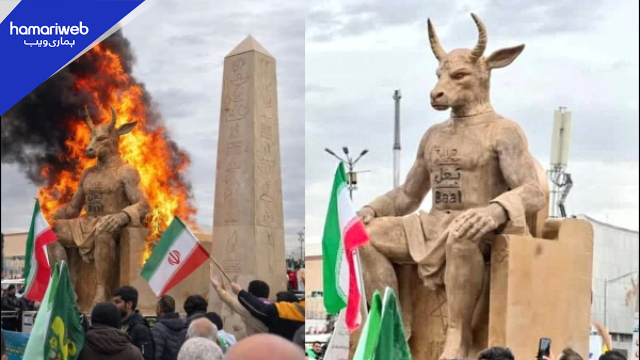
Iran burning Baal statue marked the 47th Islamic Revolution anniversary on February 11, 2026. Regime rallies in Tehran and other cities saw protesters torch horned effigies symbolizing Western corruption, Israel, and Trump amid “Death to Israel” chants.
On February 11, 2026, crowds in Iran set fire to large Baal statue effigies during state-organized rallies for the 47th anniversary of the 1979 Islamic Revolution. This happened on 22 Bahman in the Persian calendar, with major events in Tehran at Azadi Square and Enghelab Square, plus cities like Isfahan.
Iran burning Baal statue drew global attention as regime-supported demonstrators torched horned, bull-headed figures labeled “Baal.” Organizers and state media presented the act as a protest against Western moral corruption.
The effigy showed a horned bull-headed form, an ancient Canaanite deity called Baal in biblical and Islamic texts. It stood for paganism, false gods, and in modern views, evil or satanism. Protesters added symbols: a Star of David, an image of U.S. President Donald Trump, and ties to “Western decadence” or elite corruption. Some online commentary linked it to figures like Jeffrey Epstein, though that stayed in fringe discussions.
Iran burned Baal to symbolize resistance against the United States, Israel, and perceived satanic influences. Chants included “Death to Israel” and “Death to America.” Crowds displayed missiles and mock symbols of defiance amid regional tensions.
Senior officials, including the Foreign Minister and Quds Force commanders, joined the marches. These were temporary effigies built for burning, not permanent statues. No anti-regime protesters destroyed anything; regime-backed participants led the action.
Videos showed flames engulfing the giant figures in crowded squares. As of February 13, 2026, no new escalations or changes appeared in reports.
Rida Shahid
Rida Shahid is a content writer with expertise in publishing news articles with strong academic background in Political Science. She is imaginative, diligent, and well-versed in research techniques. Her essay displays her analytical style quite well. She is currently employed as English content writer at hamariweb.com.





Leave a Reply