World’s Only Albino Panda Spotted in Stunning Wildlife Footage From China
-
 Syeda Qandeel Zehra
-
Syeda Qandeel Zehra
-
- Published June 3, 2026
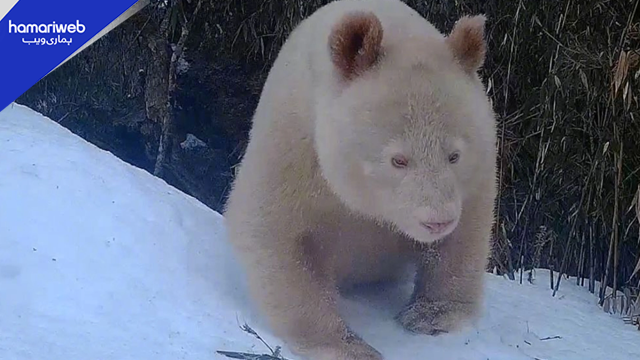
A rare albino panda in China has been captured on camera in stunning new footage, offering one of the most extraordinary wildlife sightings in recent years. The unique creature, believe to be the world’s only known wild albino giant panda, film while calmly feeding on bamboo inside the remote Wolong Nature Reserve in Sichuan, China.
The amazing footage of the albino panda first capture in 2019 when infrared camera traps were place in deep forest. Scientists have since kept an eye on the animal, and it appears to be doing well at elevations of about 6,500 metres above sea level.
Experts verify that the rare panda is a male and seems to be in a good condition. Peking University School of Life Sciences researchers say the animal has been able to integrate into its environment and even establish positive interactions with other pandas living in the area.
Wolong Nature Reserve is one of the most important conservation areas for pandas. The discovery of such a rare genetic variant underscores the conservation efforts and the quality of the ecosystem within the Reserve, according to scientists.
Researchers are taking samples of hair and feces for DNA testing to learn more about the DNA of the rare white panda to determine the genetic makeup and if there are similar pandas in the area. Conservation teams are also looking to see if the albino panda has any friends nearby.
According to Li Sheng, a researcher working with the panda, its survival is a sign of a healthy habitat, plenty of food and robust conservation efforts. Scientists believe that research on this one-of-a-kind panda could offer insights into panda genetics and evolution.
Once classified as endangered, giant pandas have seen population improvements due to long-term conservation programs in China. Fewer than 2,000 pandas remain in the wild, mostly in remote mountain regions, making this albino panda discovery even more significant for wildlife science and global conservation efforts.
Syeda Qandeel Zehra
Syeda Qandeel Zehra, an MBA holder with four years of content writing experience, is a versatile writer adept in news, blogs, and articles. Specializing in SEO content, she combines business insight with engaging storytelling. Keen on staying updated with industry trends, Syeda crafts compelling and high-ranking content that resonates with her audience.






Leave a Reply