Nepal’s Himalayan Glacial Collapse Unleashes Deadly Tsunami Across China-Nepal Border
-
Ifrah Aqeel
-
- Published August 27, 2026
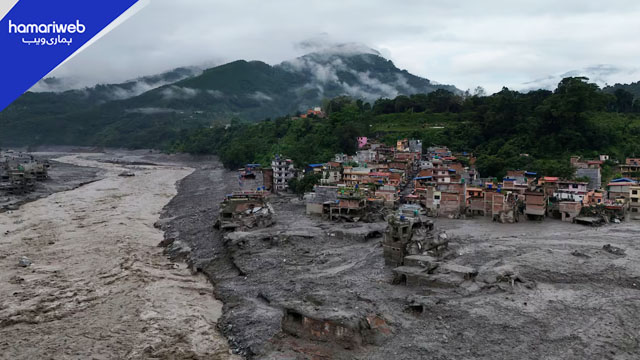
A massive glacier collapse and ice avalanche on the China-Nepal border triggered a catastrophic flash flood on Wednesday. The disaster killed at least 270 people and left over 1,400 missing.
A 5.2 magnitude seismic event occurred at approximately 8:37 AM Nepal local time on Wednesday, according to the U.S. Geological Survey (USGS). The USGS stated that the seismic energy came from the collapse of glacial rock and ice rather than a tectonic earthquake.
Simon Allen, a research associate at the University of Zurich, confirmed that a large ice avalanche mixed with rock detached, became fluid and turned into a devastating flood.
Scientists at the Nepal-based International Centre for Integrated Mountain Development (ICIMOD) stated that a large volume of ice and rock debris entered the Lende Khola, a tributary of the Bhote Koshi River. The avalanche dammed the river before releasing a sudden downstream surge.
Scale of Destruction and Casualties
The flash flood operated like an inland tsunami, traveling nearly 170 kilometers and impacting a major tourist highway connecting Kathmandu to Lhasa in Tibet, according to Rivers of the Asian Highlands. Entire settlements vanished under walls of mud and rock.
State media and disaster authorities reported at least 270 deaths. Over 1,300 people remain missing.
Nepal’s National Disaster Risk Reduction and Management Authority reported more than 800 missing people in Nepal, with nearly 600 of them being foreign nationals.
Rescue and Government Response
More than 5,000 army and police personnel are deployed in Nepal for search and rescue operations, according to army spokesperson Raja Ram Basnet. Rescuers drop donated supplies like tents and food from helicopters to affected communities.
Chinese authorities stated they maintain close communication with Nepal regarding search and rescue efforts.
Climate Change and Cryosphere Hazards
Researchers emphasize that the disaster follows a pattern of accelerating glacial instability driven by climate change. The Hindu Kush Himalaya region is warming at about double the global average pace. Glaciers in the area are shrinking twice as fast since 2000 compared to previous decades, according to studies.
Experts also highlighted the urgent need for improved early-warning systems to protect vulnerable downstream communities
Ifrah Aqeel
Ifrah Aqeel is a news writer and editor covering entertainment, trending stories, and major national and international developments. She specializes in breaking down fast-moving news, viral trends, and current events into clear, engaging content. Backed by a disciplined editorial background, Ifrah brings a fast, factual, and research-driven approach to every story she covers.






Leave a Reply