LHC Says Wife Cannot Be Denied Rights Promised in Nikahnama
-
 Syeda Qandeel Zehra
-
Syeda Qandeel Zehra
-
- Published June 6, 2026
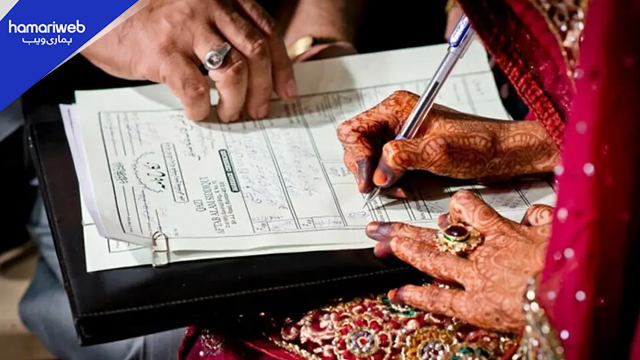
In a significant ruling concerning women’s rights and marriage laws in Pakistan, the Lahore High Court (LHC) has held that a wife cannot be deprived of the rights agreed upon in the Nikahnama after it has been signed.
The decision came in a case involving a dispute over land that had been specified as Haq Mehr (dower) in a marriage contract. The court accepted a woman’s petition and set aside a trial court ruling that had awarded her Rs16 lakh instead of the land promised in the Nikahnama.
Justice Sultan Tanveer of the Lahore High Court’s Multan Bench issued the judgment, emphasizing that the terms of a marriage contract must be honored and that women are entitled to receive the rights guaranteed to them under the Nikahnama.
According to the court record, the couple was married in 2015, and two acres of land were fixed as Haq Mehr at the time of marriage. However, instead of transferring ownership of the land, the husband paid Rs16 lakh based on the property’s value in 2015.
The Lahore High Court observed that the Nikahnama clearly stated that two acres of land would be provided as Haq Mehr. The court further ruled that if the land is to be replaced with a monetary payment, the compensation must reflect the property’s current market value rather than its value at the time of marriage.
In its detailed judgment, the court described the Nikahnama as a civil contract whose terms should be interpreted according to the true intentions of both parties. The court noted that judges must carefully examine whether a woman was fully aware of her rights and obligations when the marriage contract was signed.
The ruling also stated that a husband cannot exploit ambiguities in the Nikahnama to deny his wife the rights legally granted to her. The court found that the trial court had failed to properly interpret the Haq Mehr clause and therefore ordered a fresh hearing of the case.
Legal experts believe the judgment could serve as an important precedent in family law cases involving Haq Mehr disputes, women’s property rights, and the enforcement of marriage contracts in Pakistan.
The decision has been welcomed by rights advocates, who say it reinforces legal protections for women and highlights the importance of honoring commitments made in marriage agreements.
Syeda Qandeel Zehra
Syeda Qandeel Zehra, an MBA holder with four years of content writing experience, is a versatile writer adept in news, blogs, and articles. Specializing in SEO content, she combines business insight with engaging storytelling. Keen on staying updated with industry trends, Syeda crafts compelling and high-ranking content that resonates with her audience.





Leave a Reply