SC Rules Wife’s Haq Mehr Remains Payable if Dower Property Is Not Transferred
-
Ifrah Aqeel
-
- Published September 23, 2026
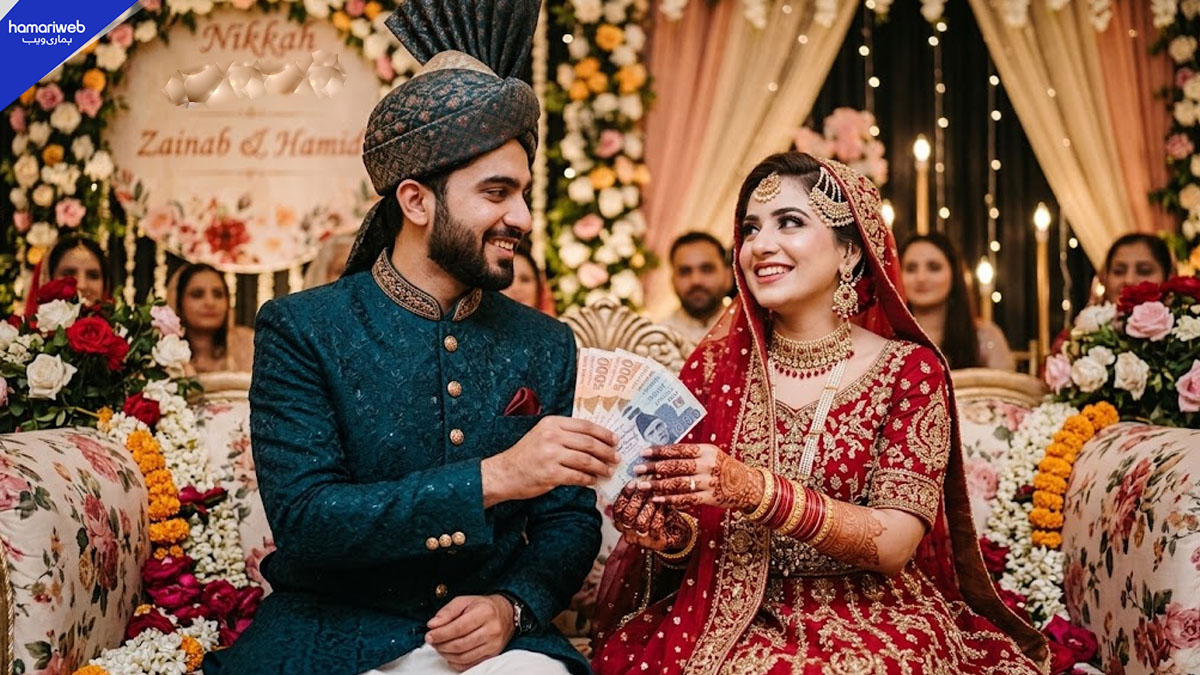
The Supreme Court has ruled that a wife’s right to haq mehr does not end if property promised as dower is not transferred. The husband remains liable for the agreed value or the property’s market value where no value was recorded.
The Supreme Court issued the ruling on September 22 while deciding a group of cases involving dower terms recorded in nikahnamas. A four-member bench headed by Justice Shahid Waheed delivered the judgment. Justice Irfan Saadat Khan, Justice Aqeel Ahmed Abbasi and Justice Shahid Bilal Hassan were also part of the bench.
The court held that haq mehr is a mandatory legal right of the wife. It is her exclusive property. It is not a price paid for marriage or commercial compensation.
The court ruled that where immovable property was agreed as dower but cannot be transferred, the husband remains responsible for the obligation. The agreed value of the property can be recovered. If the nikahnama does not record a value, the court may determine the property’s market value at the time of the decree or adjudication.
Nikahnama Entries Carry Legal Weight
The Supreme Court held that the nikahnama is the primary documentary evidence of the marriage and its agreed terms. Its entries carry a presumption of accuracy. This presumption can be challenged with clear and convincing evidence.
The court said Columns 13 to 16 of the nikahnama must be read together when examining dower arrangements. Column 13 records the total dower. Column 14 concerns prompt and deferred dower. Column 15 records any dower paid at the time of marriage. Column 16 records property given as dower and its details and value.
The court also held that nikah is not an ordinary civil or commercial contract. It is a legal institution that creates rights and obligations under Islamic law and Pakistani law.
Justice Shahid Bilal Hassan Issues Additional Note
Justice Shahid Bilal Hassan agreed with the judgment and issued an additional note on the completion of nikahnamas.
He directed nikah registrars to complete all relevant columns carefully. The directions place particular emphasis on Columns 13 to 16. Property given as dower should include sufficient details to identify it. Its value should also be recorded where the parties have agreed on one.
The registrar should explain the relevant terms to the parties before they sign the nikahnama. The court also said columns should not be left blank without a lawful reason.
The Supreme Court clarified that the legal principles do not decide the factual merits of every individual case. Each pending dispute will be considered on its own facts and evidence.
Ifrah Aqeel
Ifrah Aqeel is a news writer and editor covering entertainment, trending stories, and major national and international developments. She specializes in breaking down fast-moving news, viral trends, and current events into clear, engaging content. Backed by a disciplined editorial background, Ifrah brings a fast, factual, and research-driven approach to every story she covers.



Leave a Reply